
Tether's €1.1 Billion Juventus Bid Rejected: Crypto Giant's Football Ambitions Hit Wall Against Century-Old Italian Dynasty
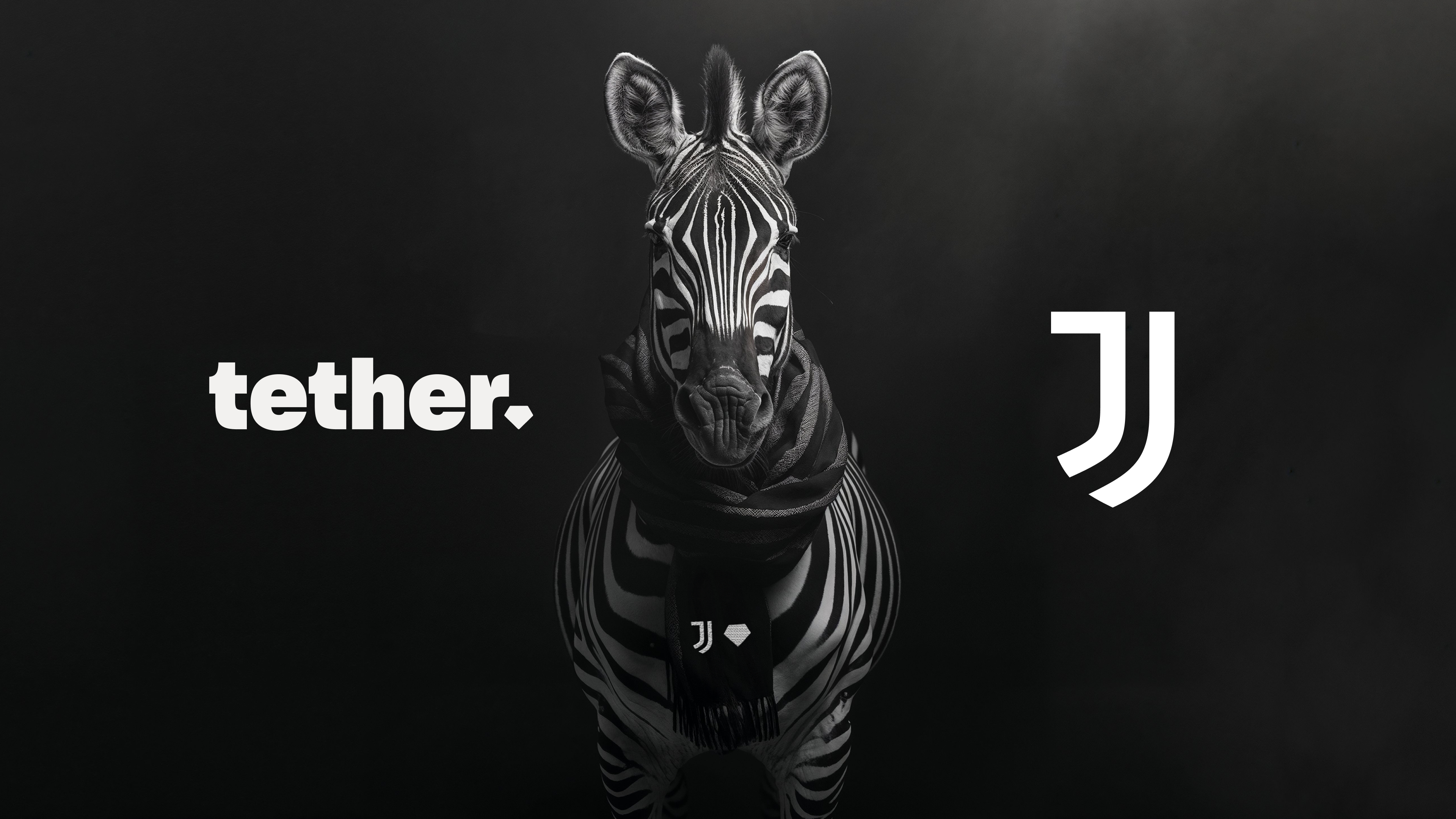
The world's largest stablecoin issuer submitted a binding proposal on Friday to acquire Exor's 65.4% controlling stake in the Turin-based club, promising an additional €1 billion investment for team development if successful. However, sources close to Exor, the Agnelli family's holding company, confirmed the same day that the club is not for sale to Tether or any other party.
The Offer Details
Tether's proposal, priced at €2.66 per share, valued Juventus at approximately €1.1 billion based on full ownership. The company's plan included acquiring Exor's majority stake, followed by a subsequent public tender offer for the remaining shares at identical pricing, ensuring all shareholders would receive equal treatment.
Paolo Ardoino, Tether's CEO and a lifelong Juventus supporter, framed the bid as deeply personal. "For me, Juventus has always been part of my life. I grew up with this team. As a boy, I learned what commitment, resilience, and responsibility meant by watching Juventus face success and adversity with dignity," he stated in announcing the offer.
The proposal emphasized Tether's commitment to long-term stability, promising stable capital and a multi-year development horizon. "Juventus is a symbol of Italian excellence with a truly global presence, built over generations through hard work, ambition, and the unwavering loyalty of its supporters. These values mirror how we have built Tether, with patience, independence, and a focus on long-term resilience," Ardoino wrote.
Beyond the acquisition price, Tether pledged €1 billion in additional investment to strengthen the first team and support broader club development and growth initiatives, signaling its willingness to provide substantial financial backing to restore Juventus to elite European status.
Swift Rejection
Despite the attractive terms, the Agnelli family's response was unequivocal. A source close to Exor told media outlets that negotiations were not underway regarding any stake sale, dismissing reports as speculation. The rejection underscores the family's deep emotional and historical connection to Juventus, which they have controlled since 1923.
John Elkann, CEO of Exor and grandson of the legendary Gianni Agnelli, had previously indicated the family's position. While expressing openness to collaboration and minority partnerships, Elkann has consistently maintained that the family intends to retain controlling ownership of the club that has been central to the Agnelli identity for more than a century.
According to the binding offer terms reported by Italian financial newspaper Il Sole 24 ORE, Tether's proposal would automatically lapse if Exor failed to submit written acceptance by 6:00 PM on December 22, giving the family just over a week to respond.
Tether's Growing Football Involvement
The rejected bid represents the culmination of Tether's year-long effort to gain influence at Juventus. The cryptocurrency firm first acquired shares in the club in February 2024, later increasing its holdings to over 10% by April, making it the second-largest shareholder after Exor.
This strategic accumulation gave Tether significant governance influence. In October, the company nominated two representatives to Juventus's board of directors: Zachary Lyons, Tether's deputy investment chief, and Francesco Garino. Shareholders approved Garino's appointment in November, marking the first time since 2001 that someone outside the Agnelli sphere joined the club's board.
In November, both Tether and Exor participated in a €97.8 million capital increase aimed at reducing the club's debt burden and supporting its strategic plan, demonstrating their joint commitment to Juventus's financial stability even before the acquisition proposal.
Following news of the bid, Juventus shares rose 2.3% to €2.23 on the Milan Stock Exchange, giving the club a market capitalization of approximately €944 million. The positive market reaction reflected investor interest in potential fresh capital injection and new ownership dynamics.
The Agnelli Legacy at Juventus
The Agnelli family's association with Juventus represents one of the longest uninterrupted ownership periods in global sports. On July 24, 1923, Edoardo Agnelli became the club's president, establishing a bond that has endured through four generations of family leadership.
The family, which built its fortune through FIAT automotive company and subsequent industrial holdings, has guided Juventus through Italian football's most successful periods. Under Agnelli stewardship, Juventus has won 36 Serie A titles, 13 Coppa Italia trophies, and two European Cups/UEFA Champions League titles, establishing itself as Italy's most decorated football club.
Key family figures who served as Juventus president include Edoardo Agnelli (1923-1935), his son Gianni Agnelli—known as "L'Avvocato" (The Lawyer)—who served as chairman from 1947 to 1954 but remained the club's most powerful figure until his death in 2003, Gianni's brother Umberto Agnelli (1990-2002), and Umberto's son Andrea Agnelli (2010-2022).
Andrea Agnelli oversaw perhaps Juventus's most successful modern period, with nine consecutive Serie A titles from 2012 to 2020, five Coppa Italia victories, and two Champions League finals appearances. His tenure ended in November 2022 amid investigations into accounting irregularities, though the family's overall commitment to the club remained unchanged.
Juventus's Financial Challenges
The timing of Tether's bid comes as Juventus faces significant financial headwinds. For the 2024-25 season, the club reported a reduced annual loss of €58.1 million, down from €199.2 million the previous year. While improved, the loss still reflects ongoing profitability challenges.
The club's shareholders' equity has declined to just €13.2 million, while net financial debt stands at €280.2 million. To stabilize finances, Juventus is planning a capital increase of up to €110 million, fully underwritten by Exor, which has already advanced €30 million to maintain liquidity.
Juventus has not posted an annual net profit in nearly a decade, and its shares have fallen approximately 28% in 2024, factors that might ordinarily make external investment attractive. However, the club's central role in Agnelli family identity appears to outweigh purely financial considerations.
Tether's Financial Powerhouse
Tether's capacity to make such an offer reflects its extraordinary financial performance. In January 2025, the company reported $13 billion in net profits for 2024, placing it among the world's most profitable firms. This figure rivals major financial institutions like Goldman Sachs, which reported $14.3 billion in net income for the same period.
The company's profit sources are diversified: approximately $7 billion came from U.S. Treasury and repo holdings, $5 billion from unrealized appreciation of gold and Bitcoin holdings, and $1 billion from other investments. Tether's U.S. Treasury portfolio reached an all-time high of $113 billion in direct and indirect holdings, positioning it among the largest government debt holders globally.
Tether's reserve base exceeds $143 billion in assets against $136.6 billion in liabilities, providing a $7 billion excess reserve buffer. The company holds nearly 84,000 Bitcoin (worth approximately $7.8 billion as of year-end 2024) and over $12.9 billion in gold reserves stored in Swiss vaults.
USDT, Tether's flagship stablecoin, maintains a market capitalization exceeding $140 billion, making it the fourth-largest cryptocurrency by market value and a critical infrastructure component for global digital asset trading. The token is increasingly popular in developing regions for payments, remittances, and dollar-denominated savings.
Strategic Diversification Beyond Stablecoins
The Juventus bid represents the latest chapter in Tether's aggressive diversification strategy beyond its core USDT stablecoin business. In July 2025, the company revealed investments in over 120 companies across multiple sectors, including Bitcoin mining, artificial intelligence, renewable energy, agriculture, and payments infrastructure.
Notable portfolio companies include Bitdeer (Bitcoin mining), Rumble (social media platform), and various technology ventures in AI, biotech, and telecommunications. These investments, valued at approximately $13.7 billion, are funded entirely from operational profits rather than reserves backing USDT.
In November 2024, Tether committed $1.5 billion to commodity trade finance across oil, cotton, and wheat sectors. The company has also made substantial investments in gold supply chain segments, including a $100 million stake in Canadian gold royalty company Elemental Altus Royalties, bringing Tether's ownership to 37.8%.
Recent launches include QVAC Health for wearable data management and a partnership with HoneyCoin targeting digital asset adoption in Africa. The company filed for an El Salvador investment fund license while initiating a share buyback program, and announced plans to invest $2.5 billion to $3 billion across five main areas in 2025.
This diversification serves multiple purposes: reducing concentration risk in U.S. Treasury exposure, creating new revenue streams, and establishing Tether as a global infrastructure player beyond cryptocurrency. The Juventus bid would have provided entry into the lucrative sports and entertainment sector with a globally recognized brand.
Crypto Meets Football: A Growing Trend
Tether's Juventus bid, while rejected, reflects cryptocurrency's increasing involvement in traditional sports. In the 2025/26 season, more than one-third of clubs in Europe's major leagues have signed sponsorship deals with cryptocurrency firms, bringing new revenue streams and increased mainstream visibility to digital assets.
However, Tether's attempted full takeover marks an unprecedented step beyond mere sponsorship. No cryptocurrency company has successfully acquired a top-tier European football club, making this bid a potential precedent-setter for future acquisitions.
The proposal highlighted potential synergies between blockchain technology and football operations. Tether's plan could have included using USDT for ticketing and merchandise transactions, implementing blockchain-based fan engagement platforms, and leveraging the club's estimated 500 million global supporters to expand cryptocurrency adoption.
Other football clubs have embraced cryptocurrency partnerships and fan tokens with varying success. Paris Saint-Germain, FC Barcelona, Juventus itself, and numerous other clubs have launched fan tokens on blockchain platforms, though these typically represent engagement tools rather than ownership mechanisms.
Regulatory and Market Implications
The bid comes at a complex time for cryptocurrency regulation globally. Tether faces varying regulatory environments across jurisdictions, including challenges in the European Union under the Markets in Crypto-Assets (MiCA) framework, which took effect in 2024.
Several major EU-regulated exchanges, including Binance, Kraken, and Coinbase, have delisted USDT or limited it to "sell-only" status for EU users, citing non-compliance with MiCA requirements. The regulation mandates that "significant" stablecoins hold at least 60% of reserves in European banks—a requirement Tether has declined to meet.
In the United States, Tether announced plans for a dual approach: launching a new stablecoin designed for domestic users while maintaining USDT under provisions of the GENIUS Act, which sets federal rules for foreign-based stablecoin issuers. The law requires full reserve backing and regular public disclosures, standards that critics question Tether's willingness to meet based on historical reserve practices.
Despite regulatory scrutiny, Tether continues expanding globally. The company obtained a stablecoin issuer and Digital Asset Service Provider (DASP) license in El Salvador, which now serves as the company's headquarters, reinforcing its mission to drive financial inclusion in regions with less stringent cryptocurrency oversight.
Industry Reaction and Future Implications
Market analysts have offered mixed assessments of Tether's rejected bid. Some view the proposal as a logical extension of the company's diversification strategy, providing tangible real-world asset exposure and potential revenue streams independent of stablecoin operations.
Others question whether cryptocurrency volatility and regulatory uncertainty make such companies suitable stewards for century-old sporting institutions with deep cultural significance. The speed of Exor's rejection suggests concerns beyond financial considerations, touching on questions of legacy, tradition, and institutional stability.
Matt Hougan, Chief Investment Officer at Bitwise, has suggested that Tether could become the world's most profitable company, potentially surpassing Saudi Aramco. If accurate, this would position Tether among an elite tier of global corporations with unprecedented financial firepower for acquisitions and investments.
Reports indicate Tether may seek to raise $20 billion in exchange for a 3% equity stake to fuel further expansion, a transaction that would value the firm near $500 billion and place it among the world's largest private companies.
Following the rejection, Tether has not indicated whether it will pursue other football clubs or maintain its existing minority stake in Juventus. The company's board positions give it continued influence over club governance, even without majority control.
The Cultural Collision
At its core, the rejected bid represents a collision between two distinct worlds: the rapid-moving, technologically-driven cryptocurrency sector and the tradition-bound realm of European football, where family dynasties and institutional memory carry enormous weight.
For the Agnelli family, Juventus represents far more than a financial asset. The club is intertwined with family identity, Italian industrial history, and cultural significance that transcends balance sheets. Selling to a cryptocurrency company—regardless of financial strength—would mark the end of an era and potentially alienate supporters who value continuity and tradition.
For Tether, the bid represented an opportunity to gain legitimacy and real-world presence beyond digital finance. Ownership of one of football's most storied clubs would have provided cultural cachet, global brand recognition, and entrée into traditional business circles still skeptical of cryptocurrency.
The rejection demonstrates that some institutions remain beyond the reach of even extraordinary wealth when that wealth originates from sectors viewed as speculative or lacking historical pedigree. Whether this represents wise stewardship or a missed opportunity depends largely on perspective.
Looking Ahead
As Juventus continues under Agnelli family control, attention turns to how the club will address its financial challenges without external capital injection. Exor's commitment to underwrite capital increases provides stability, but the club's path to sustainable profitability remains uncertain.
For Tether, the rejection is unlikely to halt expansion ambitions. With record profits, diversified investments, and strategic vision extending far beyond stablecoins, the company appears positioned for continued growth across multiple sectors.
The incident raises broader questions about cryptocurrency's role in traditional industries and whether digital-native companies can successfully integrate with established institutions. As blockchain technology matures and cryptocurrency firms accumulate wealth, similar acquisition attempts are likely to emerge, testing the boundaries between new money and old institutions.
Whether the Agnelli family's decision represents the preservation of heritage or a missed opportunity for financial revitalization, it underscores that in European football, legacy and tradition can trump even billion-euro offers from the world's most profitable cryptocurrency companies.
The automatic lapse deadline of December 22 remains in place, though given Exor's clear rejection, dramatic reversal appears unlikely. For now, Juventus remains firmly in Agnelli hands, while Tether continues its search for opportunities to bridge the gap between cryptocurrency innovation and traditional asset ownership.
Tether Submits Proposal to Acquire Juventus Football Club 🦓
— Tether (@Tether_to) December 12, 2025
Read more: https://t.co/CDv8OosqFU
This article is based on publicly available information and official statements from Tether Holdings and Exor. Market conditions and company positions are subject to change.

 संदेश
संदेश


कोई टिप्पणी नहीं